Chatbots vs. AI Assistants: Understanding the Key Differences
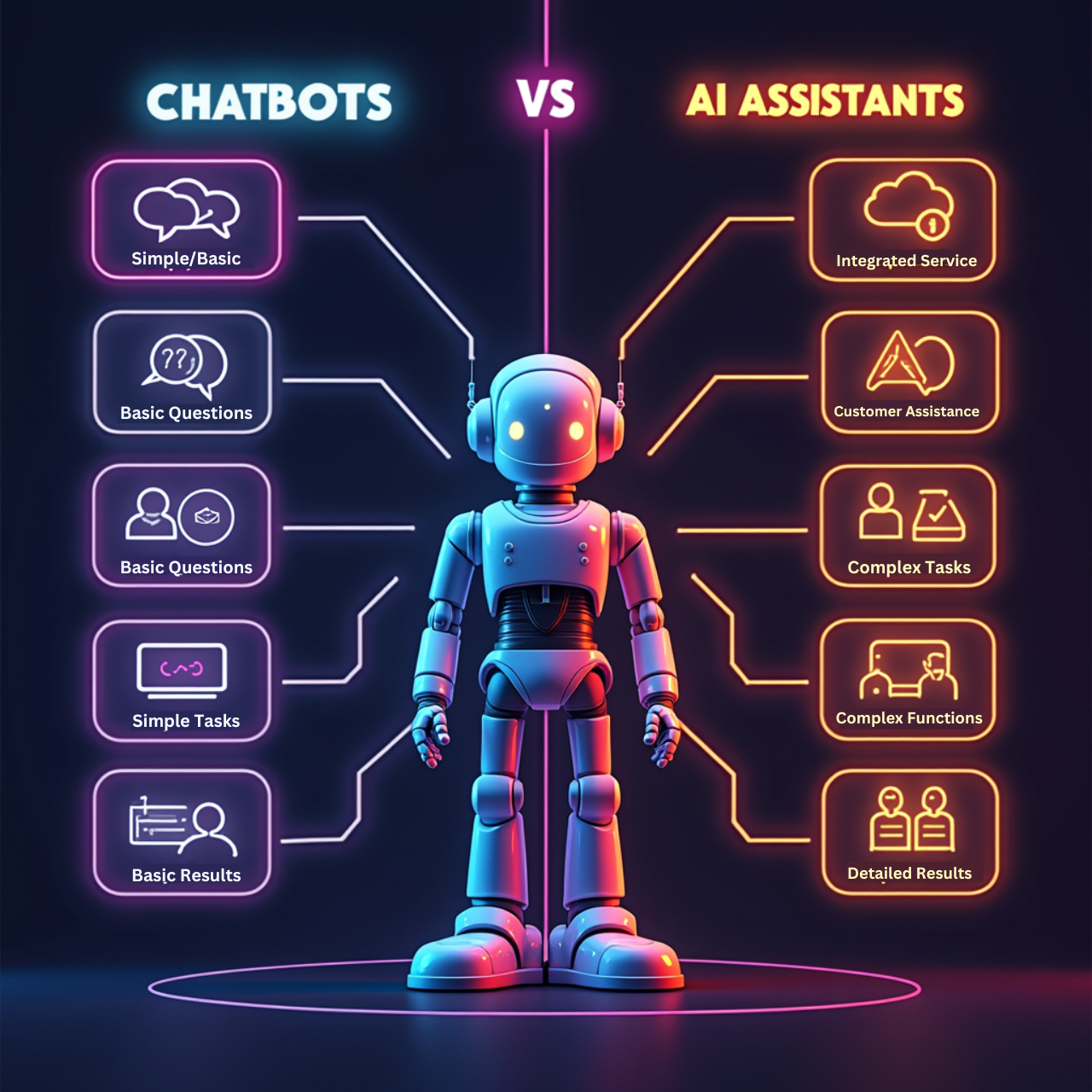
As businesses continue to embrace the transformative power of AI, tools like AI for marketing, voice AI generators, and AI assistants are redefining customer interactions and operational efficiency. While both chatbots and AI assistants are key players in automating tasks and enhancing productivity, they offer different levels of functionality. Chatbots are typically task-oriented, handling basic customer queries and delivering pre-programmed responses, which makes them ideal for simple, repetitive tasks like answering FAQs or tracking orders. However, when it comes to more complex interactions that require learning, adapting, and providing personalized responses, AI assistants shine. AI scheduling assistants, voice AI generators, and AI tools for marketing can engage in dynamic, multi-layered conversations and handle interconnected tasks like scheduling, customer service, and data analysis. Unlike chatbots, AI assistants learn from user interactions, improve over time, and can provide customized experiences based on individual preferences or behavior. This blog breaks down the five key differences between chatbots and AI assistants, helping you understand which tool is best suited for your business. From conversational complexity and learning capabilities to integration scope and personalization, we dive deep into how these AI-powered tools can enhance customer engagement and operational workflows. Whether you're looking to automate basic inquiries or streamline complex business processes, understanding the unique strengths of both chatbots and AI assistants is essential for driving success in today’s fast-paced digital landscape.
Read article